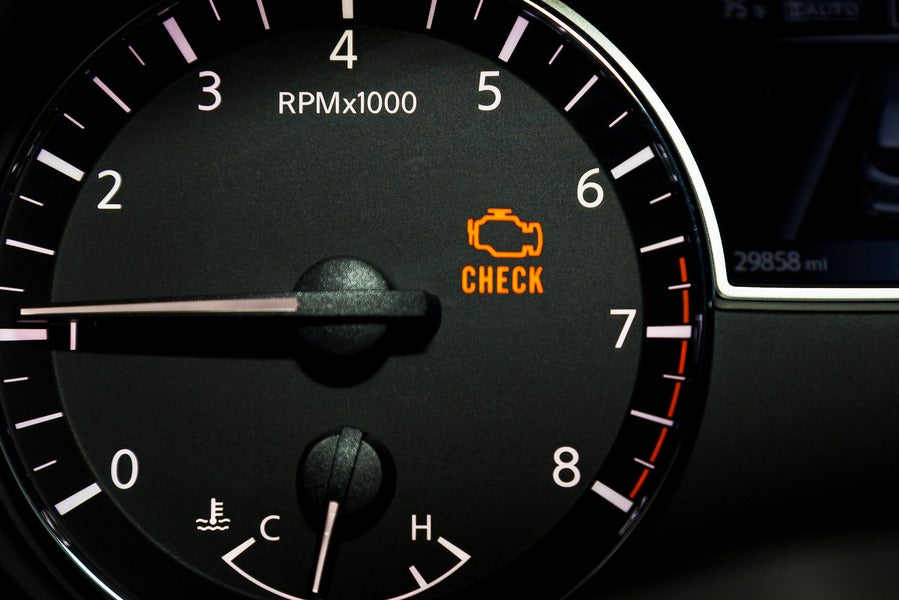



Check Engine Light On? Here's What Your Vehicle Is Trying to Tell You That little yellow engine symbol has a remarkable talent for ruining a perfectly good drive. One minute, everything's fine. The next, your dashboard is suggesting something expensive might be happening. Here's the thing: a check engine light doesn't automatically mean your engine is falling apart. It means your vehicle's computer detected a problem. For drivers in Del Rio, TX, knowing how to respond can prevent a small repair from turning into a much bigger job. What Does the Check Engine Light Mean? The check engine light usually appears as an amber engine-shaped symbol or the words "Service Engine Soon." It's connected to your vehicle's onboard diagnostic system, which monitors engine performance and emissions-related components. A steady light indicates a detected fault that needs attention. A flashing light is considerably more serious, often signaling an engine misfire severe enough to damage the catalytic converter. That's not something to investigate after another hundred miles. Can You Keep Driving with the Light On? If the light stays steady and your vehicle runs normally, you can generally drive cautiously to a repair facility. Start with the simplest possibility: check the gas cap if your vehicle has one. A loose cap can trigger an evaporative emissions warning. Tightening it may resolve the issue after several driving cycles. If the light remains illuminated, schedule a check engine light diagnosis. And if the engine starts shaking, losing power, or making unfamiliar noises, don't keep driving just because the light isn't flashing. When Should You Pull Over and Call a Tow Truck? A flashing check engine light deserves immediate attention. Reduce speed, avoid hard acceleration, and find somewhere safe to stop. The same applies if your vehicle overheats, loses oil pressure, stalls repeatedly, or produces a burning smell. Continuing to drive can turn a repairable problem into major engine damage. Nobody enjoys paying for a tow truck, but it's considerably better than paying for an engine that cooked itself on the highway. What Usually Triggers the Warning? Common causes include worn spark plugs, failing ignition coils, oxygen sensor problems, mass airflow sensor faults, catalytic converter issues, and leaks in the evaporative emissions system. Some are relatively simple repairs. Others require more extensive work. The trouble is that the dashboard uses one warning light for dozens of possible problems. A glowing engine symbol can't tell you which component failed, and replacing parts based on guesses is an excellent way to spend money without fixing anything. How Does a Technician Find the Problem? A technician connects diagnostic equipment to the vehicle's OBD-II port and retrieves stored trouble codes. Those codes identify the system reporting a fault, not necessarily the failed component. Proper engine diagnostic service involves checking sensor readings, inspecting wiring, testing components, and confirming the cause before replacing parts. Clearing the code without repairing the problem doesn't solve anything. It simply turns off the warning until the computer detects the fault again. Get Your Check Engine Light Checked in Del Rio, TX Your vehicle doesn't illuminate that warning light for entertainment. Something needs attention, and finding it early can save considerable trouble. Brown Auto Center Buick GMC in Del Rio, TX, offers check engine light diagnostics, engine repair services, and routine maintenance to help keep your vehicle running properly. Schedule a service appointment online today and let trained technicians find out what's happening before a warning light becomes a roadside breakdown.